The Democratization Engine
What AI Will Actually Do to the Economy | Part 2 of 4
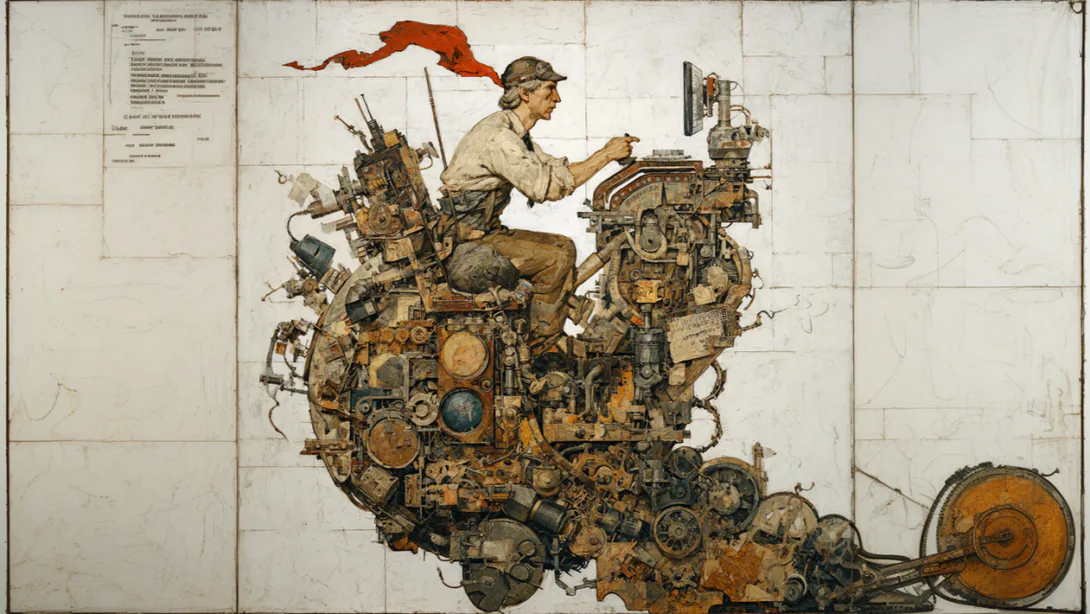
In Part 1 of this series, I argued that the prediction that AI will eliminate 80% of jobs is economically incoherent—that it produces a demand-side collapse that makes the math impossible. But debunking the doom narrative is only half the work. The more important question is what AI will actually do. And the answer is visible in the pattern of every major enabling technology of the past forty years.
The Pattern
AI will not eliminate 80% of jobs. AI will allow a company of 1,000 people generating $100 million in revenue to operate with 200 people generating that same $100 million. The other 800—people who understand the industry, know the customers, and have decades of domain expertise—will do what displaced, capable people have always done. They will start their own companies.
Four new firms of 200 people each, all suddenly able to compete for that $100 million market at radically lower cost structures. Competition increases. Products improve. Prices drop. New customers who were previously priced out enter the market. The sector doesn’t shrink from $100 million to some fraction. It grows to $200 million, maybe $300 million. Some of the new companies fail. Others thrive. New ones form. That is a dynamic, healthy, growing economy. That is capitalism actually working.
This is not speculation. It is the pattern of every major technology disruption in modern history.
Desktop Publishing: The First Moat Drainer
In the 1980s, desktop publishing eliminated entire production departments—typesetters, paste-up artists, color separators, prepress technicians. One person with a Macintosh and PageMaker could do what thirty people used to do. The result was not mass unemployment in publishing. It was an explosion of small design shops, independent publishers, and boutique agencies. The barrier to entry collapsed, and thousands of new competitors flooded the market. More magazines, more marketing materials, more creative output than ever before. The pie did not stay the same size with fewer people eating. The pie grew enormously because more people could bake.
Cloud Computing: The Infrastructure Revolution
Cloud computing followed the same pattern. Before AWS, launching a technology company required purchasing servers, hiring systems administrators, leasing data center space, and spending hundreds of thousands of dollars on infrastructure before writing a single line of product code. AWS obliterated those barriers. Two engineers in an apartment could spin up the same infrastructure that previously required a 50-person IT department at a Fortune 500 company. The result was not the death of IT. It was the birth of Airbnb, Slack, Stripe, and thousands of companies that could never have existed under the old cost structure. The enabling technology did not destroy value. It democratized the ability to create it.
AI: The Cost of Expertise Itself
AI is the next iteration of this pattern, and the most powerful one yet. It does not just lower the cost of infrastructure or production. It lowers the cost of expertise itself. A five-person firm with AI tools can now deliver strategy, analysis, design, engineering, and customer service--high quality customer service-- at a level that previously required fifty.
The competitive moat around large incumbents—the Amazons, the Microsofts, Salesforce—has never been about superior products (anyone every called O365 for support?). It's about the ability to absorb the overhead of operating at scale. AI drains that moat. And the people most threatened by that are the ones telling you the sky is falling.
Every time a technology has lowered barriers to entry, the result has been the same: more businesses, more competition, a bigger pie. The question is not whether AI will follow this pattern. The question is whether we will let it—or whether the incumbents will find a way to raise the barriers back up.
George Estrada, Chief Technology & Innovation Officer, Rize Credit Union Founder | Orion Digital Services
Originally published on LinkedIn, 17 March 2026