Sanders Is Wrong About AI
Answering Senator Sanders, Claim by Claim; An expanded response to the Wall Street Journal AI op-ed
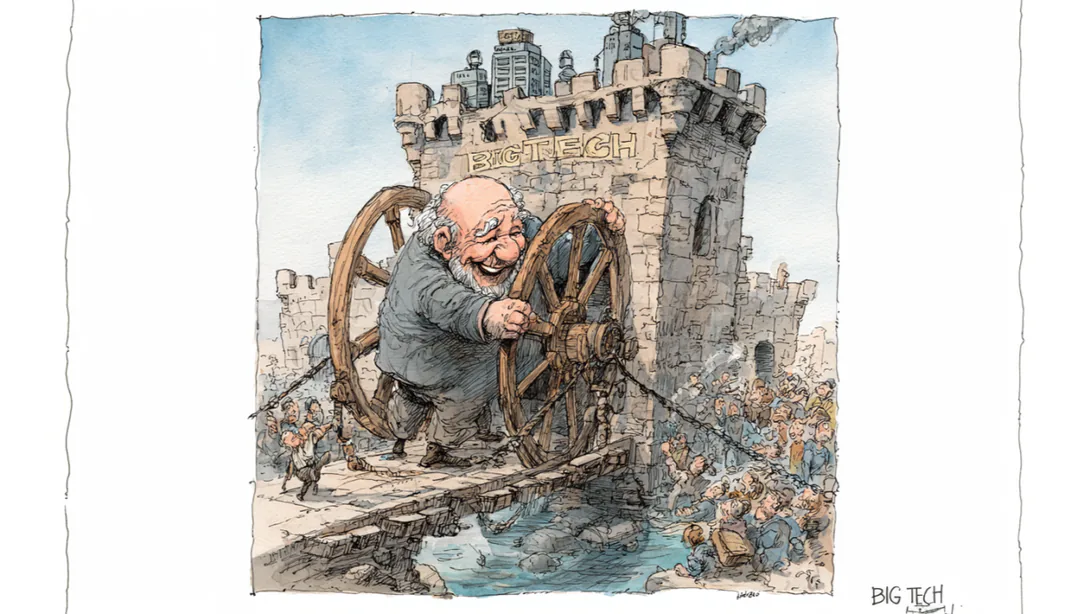
If you’re reading this, you’ve already seen my high-level response to Senator Sanders’ Wall Street Journal op-ed on AI — the seven claims I took issue with. What follows is the expanded version, because each of those claims deserves more than a bullet point.
Claim 1: AI will displace tens of millions of workers
This is the foundational claim of the op-ed, and it’s also the weakest. Sanders quotes Elon Musk on AI robots replacing all jobs and Bill Gates on humans no longer being needed for most things, and treats both as authoritative sources on labor displacement. But he spends the first half of the piece arguing that these men are self-interested oligarchs who don’t represent working people — and then immediately uses their predictions as gospel to justify his policy. If you’re going to be intellectually honest, you have to be consistent.
The historical pattern tells a different story. ATMs were supposed to eliminate bank tellers; the number of tellers actually grew after ATMs were deployed, because branches became cheaper to operate and banks opened more of them. The work shifted from counting cash to relationship banking. Spreadsheet software was supposed to eliminate accountants; instead, accounting jobs grew, because spreadsheets made analysis so accessible that every department needed someone who could do it. E-commerce was supposed to kill retail; it restructured it. The U.S. has more warehouse, logistics, and fulfillment jobs today than it had traditional retail jobs before Amazon.
The pattern isn’t that technology eliminates jobs. Technology eliminates tasks, restructures roles, and creates categories of work that didn’t previously exist. Sanders frames this as a binary — machines work, humans don’t — when every historical precedent shows it’s a transformation, not an elimination.
It is worth noting why this framing is politically irresistible. If you want to get people’s attention, scare the daylights out of them — especially when the technology threatens white-collar work. The political class was always relatively safe with white-collar voters; it could count on their ideological loyalty. But AI now threatens every white-collar job up and down the chain, from CEO to front-office clerk. Politicians may not always be wise, but they have instincts, and they can smell fear and know how to capitalize on it.
Claim 2: Billionaires invest in AI only to expand wealth and power
This is, honestly, one of the few things I agree with Senator Sanders on. I don’t want this much power concentrated in the hands of Musk, Bezos, Zuckerberg, and Ellison either. The problem is that his proposed remedy — halting all data center build-outs — plays directly into their hands. They already have the data centers. A moratorium doesn’t touch their existing capacity; it only slows the inevitable for everyone else. And if it can’t be built here, it will be built somewhere else: the Middle East, Asia, or, as Musk and Bezos are already discussing, in space. You can’t stop it.
What a moratorium will do is open the door to regulatory capture, because the only players who can absorb the cost of meeting heavy new build-out constraints are — you guessed it — Musk, Bezos, Zuckerberg, and Ellison. The same people Sanders claims to be fighting.
Sanders frames AI investment as zero-sum extraction: billionaires win, working families lose. He misses the mechanism entirely. Think back to 2006, when AWS made cloud computing available on demand. Jeff Bezos absolutely got richer — he held the title of richest man in the world for a stretch and still hovers near the top. But the reason he got richer is that millions of small businesses, startups, and developers who could never have afforded a server room could suddenly build software companies from their living rooms. Stripe, Airbnb, Slack — none of them could have existed under the old infrastructure model. Bezos captured value precisely because he democratized access.
The same dynamic is playing out with AI. Meta open-sourcing Llama means a three-person startup in Ohio can run a model that would have cost $50 million to develop five years ago. Billionaire wealth and democratized tooling are happening simultaneously. They are not opposites.
Yours truly’s career benefited from exactly this dynamic. At a time when traditional tech jobs were largely spoken for, those of us who took a chance on the cloud were the ones who got ahead. I can’t tell you how many of my peers lost out because they were too stubborn to see the opportunity — hardware jockeys who wanted to control every box in their environment.
Sanders is right about governance, and I won’t dispute that. But his policies don’t actually work in favor of the people he claims to defend. They work in favor of the players best positioned to win the regulatory capture game.
Claim 3: AI companions are making teenagers lonely
This one really irritates me. Teenagers were experiencing a loneliness epidemic long before AI companions existed. And what bugs me most is that Senator Sanders was a strong supporter of the COVID lockdowns and school closures. Nothing in recent memory damaged young people the way prolonged closures did. The decision was sloppy and the experts got it wrong. Full stop. This isn’t an argument about vaccines; it’s about the closures themselves, which were wrong, and which Sanders supported.
If he is genuinely worried about teen loneliness, he should revisit his own record. The teen mental health crisis — anxiety, depression, isolation — spiked dramatically during the closures, and the research is now clear that prolonged school shutdowns did enormous developmental harm. If human connection and youth well-being are the standard, the lockdowns he supported did orders of magnitude more damage than any AI chatbot ever has.
Claim 4: AI enables the surveillance state
Rhetorically effective, logically dishonest. Sanders quotes Larry Ellison predicting mass surveillance and treats the prediction as if it were the inevitable trajectory of all AI development. Ellison describing what could happen is not evidence that it will happen absent regulation. We already have surveillance technology — CCTV, phone tracking, facial recognition. The policy question is how to regulate use, not whether to halt the underlying technology.
Senator Sanders has been in Congress since 1991 — 35 years, 16 of them in the House and now in his fourth Senate term. To his credit, he opposed the Patriot Act in 2001, and while running for president he was the only candidate publicly opposing its reauthorization. But here is the critical point: in 2020, a Senate amendment (The Wyden–Daines amendment) that would have required warrants for government access to internet browsing and search history failed by a single vote. The amendment fell one vote short; four senators, including Sanders, were absent for the vote.
So the man now warning us about AI-powered surveillance couldn’t bother to cast the deciding vote on a measure that would have actually curtailed existing surveillance. And to underscore the point: a few weeks ago, FBI Director Kash Patel confirmed that the agency is actively purchasing Americans’ location data from commercial brokers without warrants, calling it “commercially available information.” Privacy advocates describe this as part of a never-ending expansion of private-sector surveillance hurtling us into a dystopian future. The surveillance state Sanders is warning about isn’t coming. It’s already here, and it has been built and expanded across the 35 years he has been in Congress.
Claim 5: Deepfakes are undermining democracy
Deepfakes are a real concern, but Sanders misdiagnoses the problem. Deepfakes aren’t an AI problem — they’re an information integrity problem. Photoshop existed for decades before deepfakes. Radio propaganda existed before Photoshop. The printing press enabled mass disinformation centuries before that. The solution to disinformation has never been to ban the printing press. It has been to build verification systems, media literacy, and legal accountability for fraud. A data center moratorium addresses none of that.
Claim 6: Data centers damage the environment
This is probably the senator’s strongest and most factual claim. Data center energy and water consumption are real infrastructure challenges — but they are zoning, permitting, and energy policy questions, not AI questions. In the 20th century, when automobile factories consumed enormous amounts of energy and resources, the answer wasn’t to ban factory construction. It was to develop environmental standards, require pollution controls, and invest in cleaner energy.
This is where it gets controversial: Senator Sanders’ official position is to stop building new nuclear power plants and to find “real solutions” to existing nuclear waste, while placing a moratorium on existing license renewals and targeting 100% renewable energy. That is unrealistic and unsustainable. Nuclear currently provides roughly 20% of U.S. electricity with near-zero carbon emissions. If you’re going to argue that data centers are an environmental problem, the intellectually honest response is to advocate for the energy source that solves the problem — not to oppose both the infrastructure and the clean energy that could power it.
Frankly, our nuclear technology would be far more advanced today if we hadn’t spent decades reflexively banning everything adjacent to it. The instinct to halt progress because something bad might go wrong is categorically and systematically ineffective. Sanders’ position reduces to: the building uses too much electricity, so let’s ban the building and ban the cleanest way to power it. That isn’t a policy. It’s obstruction dressed up as environmentalism.
Claim 7: Listen to Hinton and Bengio
Sanders cites Geoffrey Hinton and Yoshua Bengio as if their concerns endorse his moratorium. Neither has done any such thing. Their concerns are about alignment and capability control — research problems that, if anything, require more compute for safety work, not less.
To be specific: there is a widely cited one-sentence statement organized by the Center for AI Safety that both Hinton and Bengio signed. It reads: “Mitigating the risk of extinction from AI should be a global priority alongside other societal-scale risks such as pandemics and nuclear war.” I’ll quote it again: “Mitigating the risk of extinction from AI should be a global priority alongside other societal-scale risks such as pandemics and nuclear war.”
Both men have legitimate concerns. But notice the comparison: nuclear war. Nuclear weapons are here. They aren’t going anywhere. To pretend that every situation is a civilization-ending threat is not helpful. Five years ago, the existential threat that was going to kill us was climate change. Today it’s AI. Meanwhile, we know of one truly game-ending threat with hard precedent — an asteroid striking the planet, which is exactly what ended the dinosaurs 65 million years ago. We’ve had a lot of near misses since. How much money are we putting into planetary defense? How many times has Senator Sanders called for a serious planetary watch system? Exactly. None. Because some of the real problems are so big they’re hard to even comprehend.
I won’t dismiss the possibility that AI poses an existential risk. But I think the framing is often miscast. Could AI contribute to a catastrophe? Sure — put a faulty AI system in charge of nuclear weapons and you could plausibly say AI caused the war that ended civilization. These risks are hard to quantify because there is no precedent. But one thing I do know: halting AI research and freezing the growth of AI is not how we solve the problem.
The Real Problem with the Moratorium
A federal moratorium on data center construction does exactly what regulatory capture always does: it freezes the competitive landscape in favor of incumbents. Microsoft, Google, Amazon, and Meta already have massive data center footprints. A moratorium doesn’t affect their existing capacity. It prevents new entrants from building competing infrastructure.
Imagine if, in 2012, instead of regulating rideshare, New York had imposed a moratorium on all new transportation technology until “strong national safeguards” were in place. Uber and Lyft would never have launched there. The medallion holders would have kept their monopoly, the safeguards would have been written by the Taxi Commission, and the people who suffered most would have been the riders in underserved neighborhoods who never got the service competition would have brought.
Sanders’ moratorium does the same thing. It sounds like protecting the public from billionaires, but in practice the billionaires already have their infrastructure. The moratorium only blocks the next generation of competitors. And as I mentioned earlier, they will simply build elsewhere — the Middle East, Africa, Latin America, Asia, or eventually orbit. The AI gets served from somewhere. The only question is who gets to build the next layer.
A Better Idea: An AI Public Option
Now that I’ve worked through what is, frankly, a sloppy op-ed, let me offer something constructive. This isn’t my favorite kind of policy — I’m not generally a fan of government getting involved — but if I want to bring Senator Sanders and people on his side along, I have to put real government involvement on the table. So here it is: an AI public option built around compute vouchers and an open-source mandate.
Create a federally funded voucher program — something like Pell Grants for compute — that gives qualifying startups, academic researchers, nonprofits, and small institutions (including community banks and credit unions, where I’ll admit my bias) redeemable credits for compute, foundation model API access, and cloud infrastructure across any qualified provider.
Pair it with two conditions. First, any AI company receiving federal contracts, tax incentives, or research grants must make a baseline tier of its models available through the voucher system at regulated, transparent pricing. Second, those companies must contribute a meaningful open-weights version of their models to a public commons that voucher recipients can freely fine-tune, audit, and build upon.
To sweeten the incentive, offer matching compute grants and tax credits to any organization that releases high-quality open models, datasets, or safety tooling into the commons. This turns open source from a charity project into a funded public good, and it puts the raw materials in the hands of the people closest to real problems.
Take a state university researcher studying AI alignment — exactly the concern Hinton and Bengio raise. Today she has two options: beg a frontier lab for API access and sign an NDA that lets them control what she publishes, or give up on the research entirely because her department can’t afford the compute. Under this policy, she draws on her voucher to run experiments on open-weights models from the public commons, publishes her findings without a corporate gatekeeper, and contributes her own fine-tuned safety models back into the commons — earning matching credits for her university in the process.
That’s a flywheel. More open models attract more researchers. More researchers produce more safety work and more derivatives. The entire ecosystem gets stronger — without halting a single data center.
The shorthand is the same as Sanders’, but now with teeth. Don’t cap the ceiling. Raise the floor. And make sure the floor is open source.
Note: The ideas above aren't built from scratch—they're a synthesis of proposals already circulating from groups like the NSF's National AI Research Resource (NAIRR) pilot, Mozilla, EleutherAI, and Stanford HAI, combined with arguments from open-source advocates like Andrew Ng. My contribution is the composition: pulling these threads together and framing them around the concerns of startups, and small institutions most at risk of being locked out.
Originally published on LinkedIn, 6 April 2026